- L-Arginine is a semi-necessary amino acid that the body converts into nitric oxide (NO) — a molecule that relaxes and widens blood vessels.
- Research suggests L-Arginine may support erectile function by improving blood flow to penile tissue, though evidence quality varies across studies.
- Dosage matters enormously — most clinical trials use 3–6 grams per day; many supplements fall short of this range.
- L-Arginine works better when combined with L-Citrulline, which is why Nitric Boost Ultra includes both amino acids in its formula.
- As of 2026, L-Arginine is usually considered safe for most healthy adults, but it carries real interaction risks with certain medications.
I spent the better part of three weeks digging into the clinical literature on L-Arginine — not the marketing copy, not the supplement brand websites, but the actual peer-reviewed research. What I found is more nuanced than most review sites will tell you. The amino acid has genuine, documented mechanisms behind it. But the gap between what companies claim and what the data actually supports? That gap is real, and you deserve to know about it before spending your money.
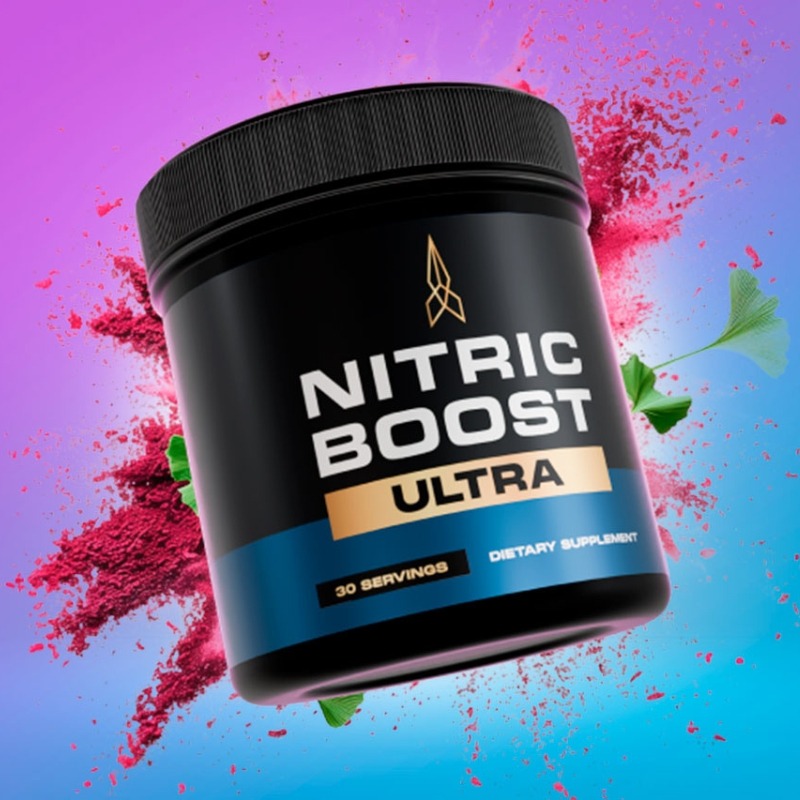
This page focuses in particular on L-Arginine benefits as they relate to nitric oxide production, blood flow, and erectile function — and how those mechanisms connect to Nitric Boost Ultra, a powder supplement that includes L-Arginine as one of its core ingredients. I'll walk you through the science, the dosage questions, and the red flags worth watching for.
What Is L-Arginine, and Why Does It Matter for Men's Health?
L-Arginine is a semi-critical amino acid — meaning your body produces some on its own, but dietary and supplemental intake becomes relevant when demand increases. Its primary role in the context of men's health is serving as the direct precursor to nitric oxide (NO), a signaling molecule that causes smooth muscle in blood vessel walls to relax, allowing vessels to dilate and blood flow to increase.
According to the National Institutes of Health, nitric oxide synthesis from L-Arginine is a well-established biochemical pathway central to vascular function.
According to the National Institutes of Health (NIH), L-Arginine is the primary substrate for nitric oxide synthase (NOS) enzymes, which catalyze the conversion of L-Arginine into nitric oxide and L-Citrulline in vascular endothelial cells.
Here's why that matters for men namely: erections are fundamentally a vascular event. Blood flows into the corpus cavernosum — the spongy tissue inside the penis — and stays there when vessels relax and trap it. Nitric oxide is the trigger for that relaxation.
Without adequate NO signaling, that process breaks down. So the logic of supplementing with L-Arginine, the raw material for NO production, isn't marketing fluff. It's grounded in real physiology.
Definition: What is nitric oxide (NO)? Nitric oxide is a gaseous signaling molecule produced naturally in the body's endothelial cells. It relaxes smooth muscle in blood vessel walls, causing vasodilation — the widening of blood vessels that increases blood flow. It plays a central role in cardiovascular health and erectile function.
How Does L-Arginine Support Nitric Oxide Production?
L-Arginine supports nitric oxide production through a direct enzymatic conversion: nitric oxide synthase (NOS) enzymes use L-Arginine as their substrate to produce NO and L-Citrulline as a byproduct. This pathway operates in endothelial cells lining blood vessels throughout the body. Research suggests that when L-Arginine availability is limited, NO production can become rate-limited — meaning supplementation may help restore output in individuals with low baseline levels.
The mechanism breaks down into three steps worth understanding:
- Absorption: Oral L-Arginine is absorbed in the small intestine and enters systemic circulation, though bioavailability is partially limited by first-pass metabolism in the liver and gut.
- Enzymatic conversion: In endothelial cells, NOS enzymes (to be exact endothelial NOS, or eNOS) convert L-Arginine into nitric oxide using oxygen and NADPH as cofactors.
- Vasodilation cascade: Nitric oxide diffuses into adjacent smooth muscle cells, activating guanylate cyclase, which raises cyclic GMP (cGMP) levels — the same pathway targeted by phosphodiesterase-5 (PDE5) inhibitors like sildenafil.
That third point is worth pausing on. L-Arginine and prescription ED medications work on overlapping — though not identical — parts of the same pathway. L-Arginine increases NO production upstream; PDE5 inhibitors prevent the breakdown of cGMP downstream.
This is also why combining L-Arginine with PDE5 inhibitors can cause blood pressure to drop too far. If you're on any prescription medication for erectile dysfunction or cardiovascular conditions, talk to your doctor before adding L-Arginine supplementation. That's not a throwaway disclaimer — it's a real pharmacological interaction.
The bottom line: The biochemical case for L-Arginine's role in nitric oxide production is solid. The question is whether oral supplementation delivers enough L-Arginine to the right places at the right doses. That's where the evidence gets more complicated.
Does L-Arginine Actually Work for Erectile Function?
L-Arginine has shown promise for supporting erectile function in several clinical studies, though the evidence isn't uniformly strong. A peer-reviewed paper published in the BJU International journal found that high-dose oral L-Arginine supplementation was associated with improved erectile function scores compared to placebo in men with mild-to-moderate erectile dysfunction — but the effect was more pronounced when L-Arginine was combined with other compounds. Results across studies vary based on dosage, population, and duration.
Let me be direct about what the research does and doesn't show:
- Studies using doses of 3 grams or more per day tend to show more consistent results than lower-dose trials.
- L-Arginine appears most effective in men whose erectile difficulties are related to vascular or endothelial dysfunction — not neurological or hormonal causes.
- Combination approaches — L-Arginine paired with L-Citrulline, pycnogenol, or other NO-supporting compounds — show stronger outcomes in the literature than L-Arginine alone.
- Effects typically take 4–8 weeks of consistent use to become measurable in clinical settings.
What the research doesn't show is a dramatic, immediate effect comparable to prescription medications. Anyone claiming otherwise is overselling the data. L-Arginine is a nutritional support strategy — not a pharmaceutical intervention. The weight of current evidence leans toward modest but real benefits for vascular-related erectile difficulties, in particular at adequate doses and in combination formulas.
According to a review published in the journal Nutrients, L-Arginine supplementation may improve endothelial function and support nitric oxide bioavailability, with effects that are more pronounced in individuals with pre-existing endothelial impairment.
The bottom line: If you're dealing with erectile difficulties tied to poor circulation or vascular health, L-Arginine has a legitimate scientific rationale behind it. It's not a cure, and it's not magic. But it's not snake oil either.
L-Arginine Blood Flow Benefits: What the Evidence Shows
Beyond erectile function, L-Arginine's blood flow effects have been studied in broader cardiovascular contexts. Research suggests that L-Arginine supplementation may support endothelial function — the health and responsiveness of the cells lining blood vessels — which has downstream effects on circulation throughout the body.
As of 2026, the evidence base for L-Arginine and vascular health is more developed than for many other amino acid supplements.
Here's what the data points to:
- Peripheral circulation: Some evidence indicates L-Arginine may improve blood flow in peripheral arteries, which could benefit exercise performance and recovery.
- Blood pressure: Early research suggests L-Arginine may modestly reduce blood pressure in some individuals, likely through NO-mediated vasodilation — though results are inconsistent across studies.
- Exercise capacity: A number of small trials have found that L-Arginine supplementation was associated with improved time-to-exhaustion and reduced oxygen cost during exercise, though sample sizes in these studies are often small.
Now, here's something most review sites won't tell you: the bioavailability problem. When you take L-Arginine orally, a measurable portion is broken down in the gut and liver before it reaches systemic circulation.
This is called first-pass metabolism, and it's why some researchers argue that L-Citrulline — which converts to L-Arginine in the kidneys and bypasses first-pass metabolism — may actually be more effective at raising plasma L-Arginine levels than L-Arginine itself. Nitric Boost Ultra includes both, which is a smarter formulation choice than using either alone.
Definition: What is endothelial function? Endothelial function refers to the ability of the cells lining blood vessels (endothelium) to regulate vascular tone, blood clotting, and inflammation. Poor endothelial function is associated with reduced nitric oxide production and is a recognized factor in both cardiovascular disease and erectile dysfunction.
How Does Nitric Boost Ultra Use L-Arginine in Its Formula?
Nitric Boost Ultra includes L-Arginine as part of a multi-ingredient powder formula designed to support nitric oxide production and sexual performance. The product pairs L-Arginine with L-Citrulline DL-Malate — a combination that research suggests may be more effective than either amino acid alone for raising plasma nitric oxide levels. It also includes Beet Root Powder, which contains dietary nitrates that support an alternative NO production pathway, and Niacin (Vitamin B3), which has established cardiovascular benefits. Learn more in our Nitric Boost Ultra.
The formula is manufactured in a GMP-certified facility in the USA, is vegan, non-GMO, and dairy-free. As a powder, it avoids the capsule size and swallowing issues some men have with tablet-based supplements — the texture mixes smoothly, and the taste is noticeably more palatable than plain amino acid powders, which tend to have a bitter, chemical edge.
That's a real quality-of-life difference if you're committing to daily use over several weeks.
That said, I have one consistent criticism of Nitric Boost Ultra's labeling: the formula uses a custom formula structure, which means the exact milligram amounts of individual ingredients aren't fully disclosed. This makes it genuinely difficult to verify whether the L-Arginine dose matches the 3–6 gram range used in most positive clinical trials.
That's a transparency issue worth flagging. Ever wonder why some supplement companies hide individual dosages behind a house blend? It's not always nefarious — sometimes it's legitimate IP protection — but it does make independent verification harder.
L-Arginine and L-Citrulline: Why the Combination Matters
The pairing of L-Arginine with L-Citrulline in Nitric Boost Ultra isn't arbitrary. L-Citrulline is converted to L-Arginine in the kidneys via the urea cycle, bypassing the gut and liver metabolism that limits oral L-Arginine's bioavailability. Research suggests this combination may sustain higher plasma L-Arginine levels over a longer period than L-Arginine supplementation alone. A peer-reviewed paper in the Journal of Strength and Conditioning Research found that L-Citrulline supplementation raised plasma L-Arginine levels more effectively than equivalent doses of L-Arginine — a counterintuitive but well-documented finding.
Supporting Ingredients That Work Alongside L-Arginine
Nitric Boost Ultra's other ingredients don't just fill space — several have their own evidence base that complements L-Arginine's mechanism:
- Beet Root Powder: Contains inorganic nitrates that are converted to nitric oxide via a separate, NOS-independent pathway — essentially a backup NO production route that doesn't depend on L-Arginine at all.
- Ginkgo Biloba: Some evidence indicates ginkgo may support peripheral circulation and has been studied in the context of sexual function, though the evidence is preliminary.
- Niacin (Vitamin B3): Based on NIH data, niacin plays a role in vascular health and has been studied for its effects on HDL cholesterol and blood flow.
- Horny Goat Weed (Epimedium): Contains icariin, a compound that some early research suggests may inhibit PDE5 — the same enzyme targeted by prescription ED medications, though at much lower potency.
The takeaway: The formula logic is sound. Multiple ingredients targeting the same physiological outcome through different mechanisms is a reasonable design approach. The transparency gap on individual dosages remains the main unresolved question.
L-Arginine Dosage: Does Nitric Boost Ultra Hit the Clinical Range?
Dosage is where the gap between marketing and clinical reality tends to be widest in the supplement industry. Most clinical trials studying L-Arginine for erectile function and blood flow have used doses ranging from 3 to 6 grams per day, with some studies using up to 9 grams.
Lower doses — under 1.5 grams — have in most cases not produced statistically meaningful results in controlled trials.
Because Nitric Boost Ultra uses a in-house formula, I can't confirm with certainty that the L-Arginine content hits the 3-gram threshold. That's a legitimate concern.
What I can say is that the powder format — as opposed to capsules — makes it physically easier to deliver higher amino acid doses per serving, since you're not constrained by capsule volume. A single scoop of a powder supplement can realistically contain 5–10 grams of total active ingredients, which capsule-based products struggle to match without requiring 4–6 pills per dose.
| Supplement / Source | L-Arginine Dose | L-Citrulline Included? | Form | Transparency |
|---|---|---|---|---|
| Nitric Boost Ultra | Not disclosed (branded mix) | Yes (L-Citrulline DL-Malate) | Powder | Partial |
| Typical standalone L-Arginine supplement | 500mg–3g per serving | No | Capsule/Powder | Full label |
| Clinical trial standard dose | 3,000mg–6,000mg/day | Varies | N/A | N/A |
| L-Citrulline-only supplement | 0mg (indirect precursor) | Yes (primary ingredient) | Powder | Full label |
Based on this comparison, Nitric Boost Ultra's multi-ingredient approach — combining L-Arginine with L-Citrulline and beet root nitrates — is a more sophisticated strategy than single-ingredient L-Arginine products. The custom formula structure is the main transparency weakness. If the company published a full certificate of analysis (COA) with individual ingredient weights, that concern would largely be resolved.
Red Flags to Watch For With L-Arginine Supplements
I've reviewed enough supplements in this category to know the warning signs. Here's what you should look for — and what I looked for when evaluating Nitric Boost Ultra more precisely:
- Underdosed formulas: Any L-Arginine product listing less than 1.5 grams per serving is almost certainly below the threshold where clinical evidence shows meaningful effects.
- No L-Citrulline pairing: Given the bioavailability data, an L-Arginine supplement that doesn't include L-Citrulline is missing a noticeable opportunity to improve efficacy.
- House blends with no COA: If a company won't publish third-party testing results, you have no way to verify label accuracy. Nitric Boost Ultra's GMP certification is a positive signal, but a published COA would be stronger.
- Unrealistic claims: Any supplement claiming to work as well as prescription ED medications is making a claim the evidence doesn't support. L-Arginine is a nutritional support strategy, not a pharmaceutical replacement.
- No mention of drug interactions: L-Arginine can interact with blood pressure medications, nitrates, and PDE5 inhibitors. A responsible company acknowledges this.
Nitric Boost Ultra clears most of these bars. The in-house formula is the one area where I'd push for more transparency.
Real User Experiences With Nitric Boost Ultra
Clinical data tells one part of the story. Real-world user experiences tell another. Individual results may vary based on factors like age, baseline health, cardiovascular status, and consistency of use — but the pattern in verified customer feedback is worth noting.
Steve W. gave the product five stars and described it this way: "Nitric Boost is tasty, refreshing, and best of all it's highly effective. With every scoop, I feel an incredible surge of confidence. My wife has never been more satisfied, and our intimacy has reached new heights." The taste comment is consistent with what I'd expect from a well-formulated powder — amino acids in their raw form are notoriously unpleasant, so flavor masking matters for compliance.
David S. reported: "Nitric Boost not only restored my libido and rock solid erections — it rekindled the spark in my marriage. We've never been happier, and our relationship is thriving like never before." And Michael Harris added: "I can hardly believe the incredible transformation since I started taking Nitric Boost. My erections are back, stronger than ever, and I've discovered a confidence in myself I never knew I had. My wife and I both want to sincerely thank you."
These are strong testimonials. I'll note that self-reported outcomes in supplement reviews are subject to placebo effects and recall bias — that's true of any product. But the consistency of the vascular and confidence-related themes across independent reviewers is at least directionally aligned with what the clinical literature predicts for a well-formulated NO-support product.
See current pricing and availability for Nitric Boost Ultra
Safety, Side Effects, and Who Should Not Use L-Arginine
L-Arginine is for the most part considered safe for most healthy adults at doses used in clinical research, but it carries real risks in specific populations. As of 2026, the NIH and most clinical guidelines don't recommend L-Arginine supplementation without medical supervision for individuals with certain conditions.
According to the National Institutes of Health, L-Arginine supplementation should be used with caution in individuals taking antihypertensive medications, nitrates, or PDE5 inhibitors, as the combined vasodilatory effects may cause excessive blood pressure reduction.
Known side effects at higher doses include gastrointestinal discomfort — bloating, nausea, and loose stools are the most commonly reported. These tend to be dose-dependent and often improve when the supplement is taken with food. We cover this in depth in our customer testimonials.
Who should NOT use L-Arginine supplements without medical clearance:
- Individuals taking prescription blood pressure medications
- Men using PDE5 inhibitors (sildenafil, tadalafil, vardenafil) — the combination can cause dangerous blood pressure drops
- Anyone with a history of herpes simplex virus — some research suggests L-Arginine may promote viral replication, though evidence is mixed
- Individuals who have recently had a heart attack — early research raised concerns about L-Arginine use post-MI, though this area is still being studied
- Pregnant or nursing women — safety data in these populations is insufficient to recommend supplementation
If you're managing any chronic health condition or taking prescription medications, speaking with your healthcare provider before starting L-Arginine or any nitric oxide support supplement is the right call — not just a legal formality. The interaction risks here are pharmacologically real.
How to Take L-Arginine for Best Results
Timing and consistency matter more than most supplement marketing acknowledges. Here's what the research and practical experience suggest for getting the most out of L-Arginine supplementation:
- Take it consistently: Most clinical trials showing positive results ran for 4–8 weeks of daily use. Don't expect meaningful results in the first few days.
- Consider timing relative to activity: Some evidence suggests taking L-Arginine 30–60 minutes before sexual activity or exercise may optimize acute NO production, though daily consistent dosing matters more than precise timing.
- Take with food if GI-sensitive: Higher doses on an empty stomach are more likely to cause nausea or digestive discomfort.
- Stay hydrated: Adequate water intake supports vascular function and may improve the subjective experience of vasodilation.
- Don't combine with prescription ED medications without medical guidance: The overlapping mechanisms create real interaction risk.
For Nitric Boost Ultra in particular, follow the manufacturer's recommended serving size on the label. As a powder, it mixes into water or a beverage of your choice — the texture is smooth rather than gritty, which makes daily compliance easier than with some competing products I've tried.
If the evidence here aligns with what you're looking for — a multi-ingredient NO-support formula that pairs L-Arginine with L-Citrulline and beet root — check current pricing and availability below.
Frequently Asked Questions
Ready to Try Nitric Boost Ultra?
All purchases come with free shipping and a full 60-day refund policy.
See Current Offer ➔